Shoes have often been an overlooked necessity. People need food, water, clothes and medicine, but shoes seldom make it to the list of essentials. Even so, it is not difficult to understand the value of footwear.
Shoes are often the most difficult item to get hands on in materially impoverished communities. For many children, a pair of shoes can prove to be the difference between a bright future or a bleak one.
“Around 40% of children walk barefoot or with under-protective footwear.”
Walking barefoot in discarded rustic waste makes one prone to tetanus and numerous other infections.
“1.5 billion people get infected by diseases that could be prevented by wearing proper footwear.”
Inadequate nutrition, unhygienic living conditions, lack of access to proper health services, essential commodities and higher risk of diseases is common to the poor. Thus, a pair of shoes and slippers is a far privilege. For these people it is not less than the blessing to have proper footwear.
Several school-going children in the city, particularly those going to Government or Aided schools have to go to school barefooted. The sight has become so common that it often doesn’t even appear odd enough to raise concern.
People who live below the poverty line are often forced to live on the streets, footpaths or in the slum areas. These people live in such areas where the living conditions are sometimes unbearable. For these people, a pair of shoes is at the bottom of their priority list.
It is not even a remote concern to the parents of several poor children who cannot afford footwear. They have a very difficult time dealing with the heat, cold and rains.
Walking barefoot could lead to serious problems such as worm infestations, infections and pricks, cuts and bruises from with pieces of glass, metals and nails lying on the road. According to WHO, lack of footwear with the impoverished is a global issue that needs to be addressed. One can commonly observe children from deprived backgrounds walk around barefoot. There are extreme and long-term health effects of walking through infectious garbage and sewage water.
For children in severe poverty-stricken countries, going barefoot because of a lack of adequate footwear is a heart-breaking reality. Is it not our responsibility to take a step towards their protection too?
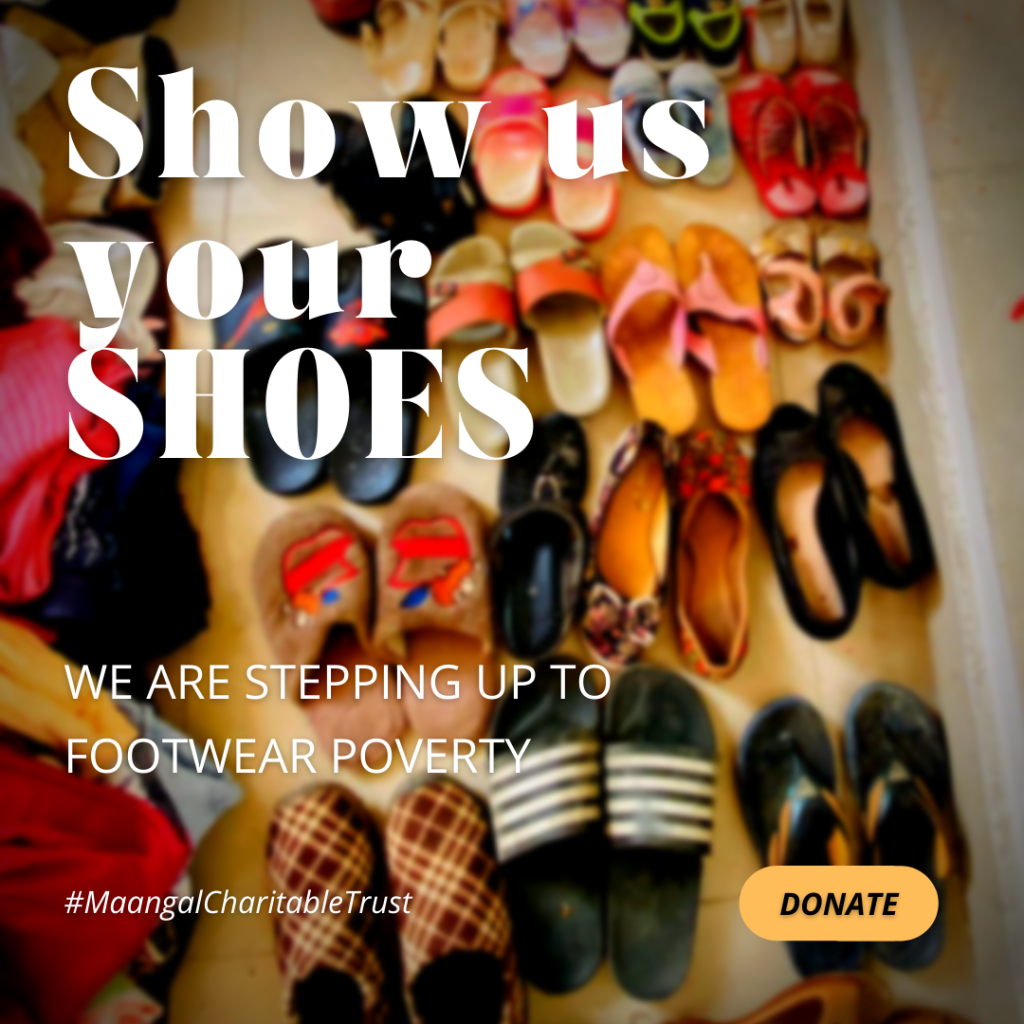
Every household has old shoes that keep gathering dust in some corner as time passes. We should realize, what’s no use to us anymore could help make someone’s life a lot easier and even save a life. Let us pledge to undertake getting shoeless feet covered.
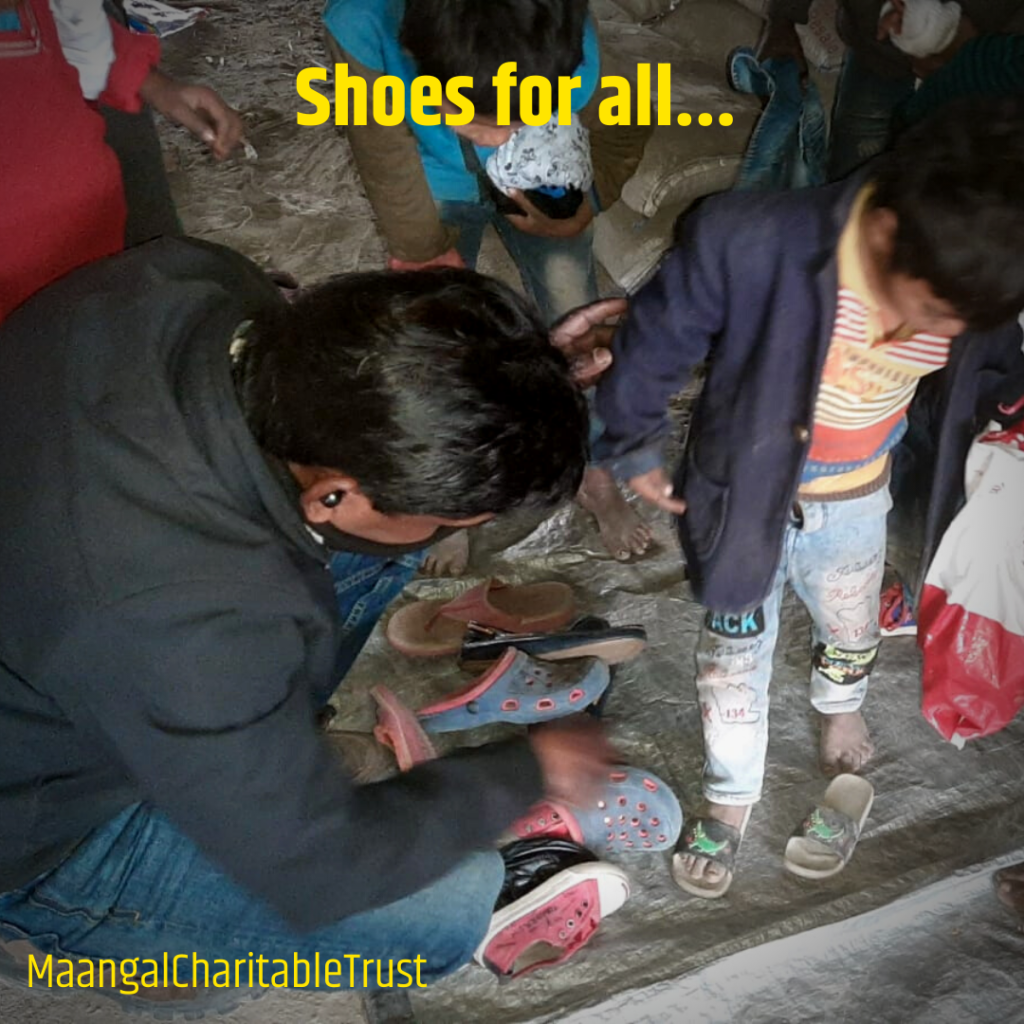
We have established a ‘Footwear Bank’ for these deprived children are running ‘Footwear Collection Drives’ around Dehradun to distribute shoes and slippers amongst the ones who really need them.